
Risk management in trading: how much to risk per trade
Accounts are lost more often because of position size than because of a bad idea. Risk management decides in advance how much you're willing to lose in one trade and in one day.
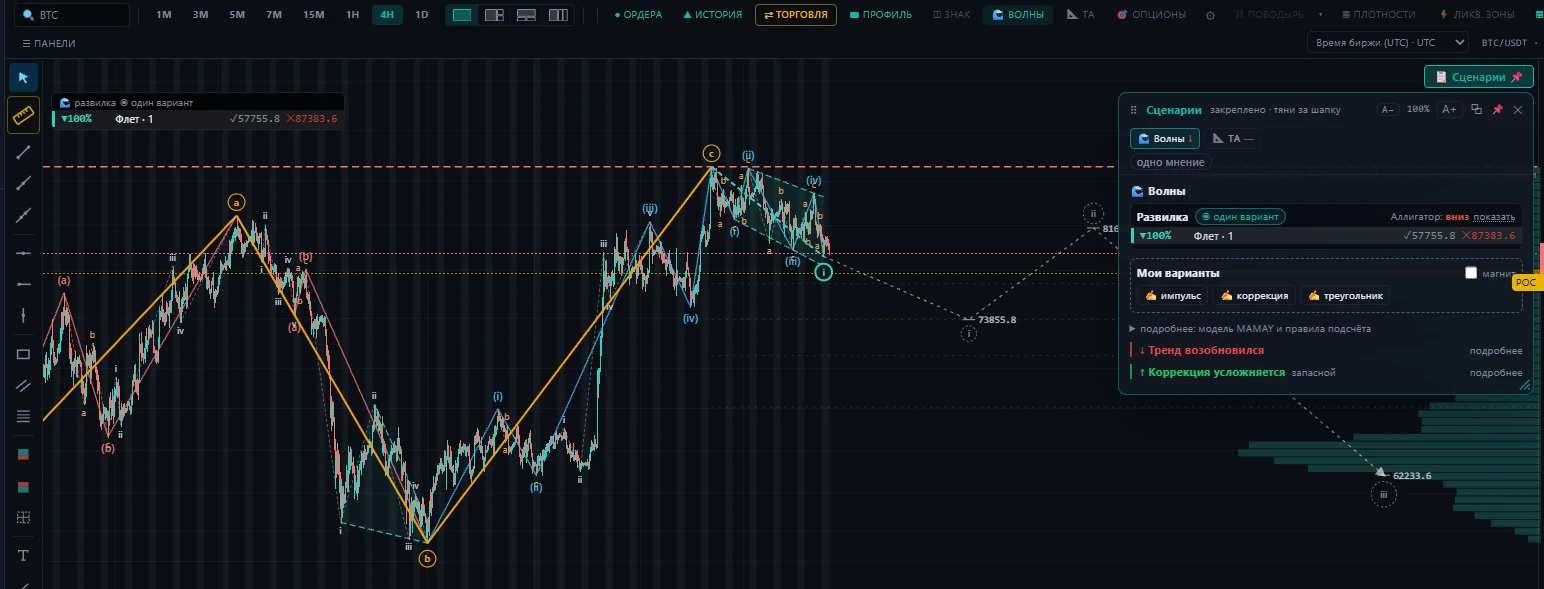
Start with the question about losing
A trade doesn't begin with "how much will I make" but with "how much will I lose if I'm wrong". You need three concepts:
- Stop: the price at which you admit a mistake and close the trade.
- Risk per trade: the amount you lose if the stop is hit.
- Position size: how much to buy so the loss at the stop equals your chosen risk.
The one percent rule
A common guideline is no more than 1% of the account per trade, and 0.5% is better for a beginner. Then even ten losing trades in a row take about 10%. Unpleasant, but the account survives.
The position size formula
Position size = risk in money ÷ distance to the stop in percent
Example. Account $2,000. Risk 1% is $20. Entry at $50, stop at $48.5, distance 3%.
$20 ÷ 0.03 = $667. That's the amount to buy. If the stop is hit, the loss is $20 plus fees.
The farther the stop, the smaller the position, while the risk in money stays the same.
Reward to risk
If the target is three times farther than the stop, even a strategy that loses more often than it wins can be profitable:
| Reward to risk | Share of winners to break even |
|---|---|
| 1 to 1 | 50% |
| 2 to 1 | 33% |
| 3 to 1 | 25% |
This is before fees, which raise the threshold.
Daily and weekly limits
- Daily limit. For example, 3% of the account. Hit it and trading is over for today.
- Losing streak. After several in a row, take a break.
- Leverage. It doesn't change the risk if size is calculated from the stop, but it brings liquidation closer. Your stop must sit before it.
These numbers are guidelines. Pick your own and write them down before you trade, not during a drawdown.
How MAMAY helps you stick to them
In the trading panel MAMAY sizes the position by risk and checks liquidation against the stop before an order goes out. If the stop is more than 10% from entry, the scenario card says plainly there's no entry point. State control tracks your daily loss and losing streaks. On a prop account, the firm's limits are visible in a separate hub.
FAQ
What percent of the account should I risk per trade?
A common guideline is up to 1%, or 0.5% for a beginner. It isn't an exchange rule, but a way to survive inevitable losing streaks.
Can I trade without a stop?
Technically yes, but then the size of a possible loss isn't defined. MAMAY can require a stop on every entry order.
What matters more, win rate or reward to risk?
Both matter. Neither says much alone: look at the result after fees over a large enough number of trades.