
How to read an order book
The order book shows who is ready to buy or sell, and at what price, right now. Here's how to read it and how it can mislead you.
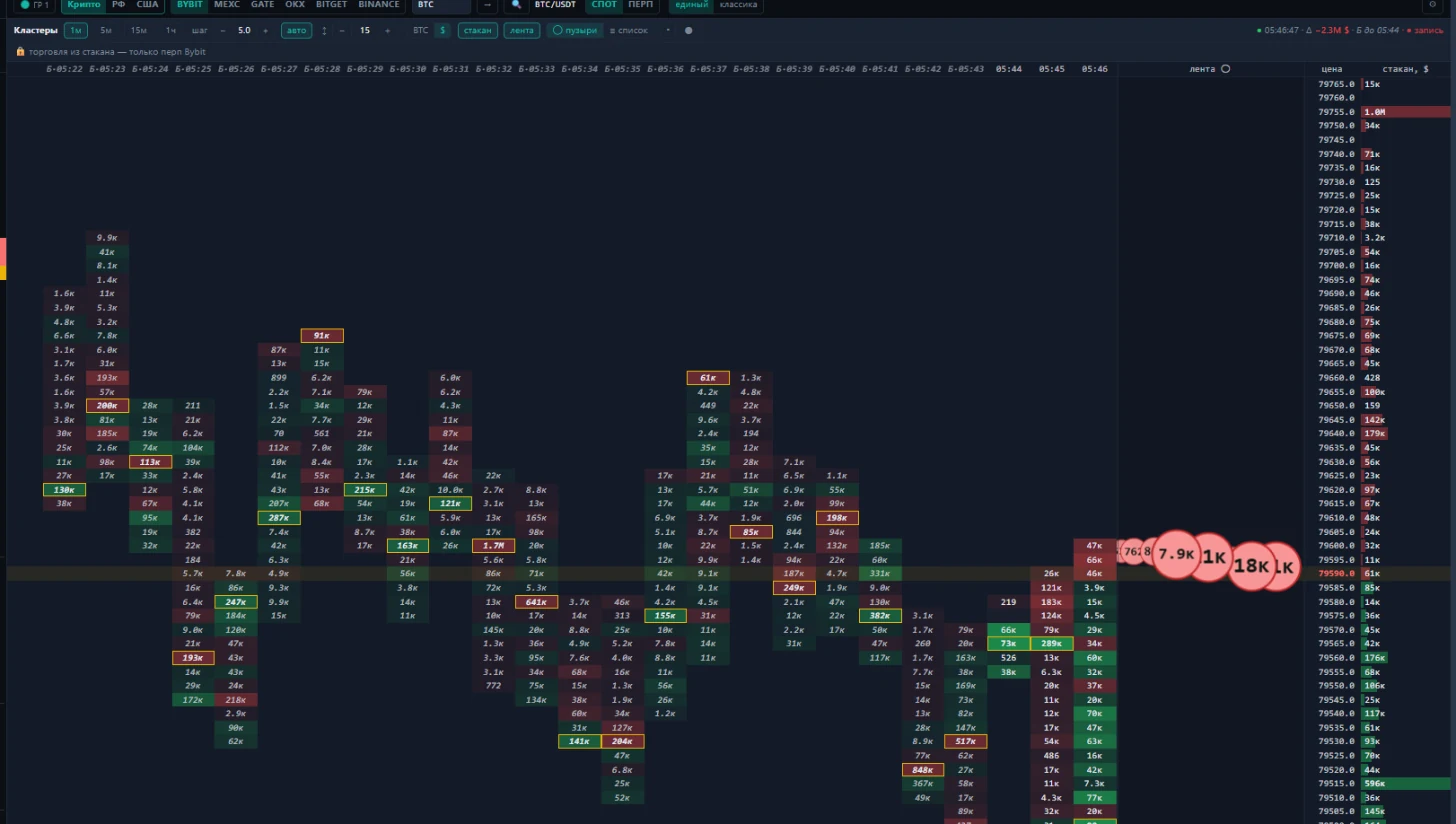
What an order book is made of
The order book (also called the depth of market, or DOM) is a list of all limit orders at each price.
- Asks are sell orders, above the current price.
- Bids are buy orders, below the current price.
- The spread is the difference between the best ask and the best bid.
Example. Best bid 100.00, best ask 100.05. The spread is 0.05. If you buy at market you fill at 100.05, and you could only sell right back at 100.00. You've lost that 0.05 before any fees.
How price moves through the book
Price changes when market orders eat limit orders. A market buy takes asks from the bottom up. Once everything at 100.05 is gone, the next trade fills at 100.06 or higher.
Hence a simple rule: the fewer orders in the way, the more easily price passes through that zone. Conversely, large orders can slow it down.
What to watch in the order book
- Spread. A wide spread makes entry and exit more expensive. On tight coins each trade costs noticeably less.
- Depth. How much money sits near the price. In a thin market even a small order moves the price a lot.
- Walls. Orders many times larger than their neighbors. There's a separate article on them.
- Reaction. What's sitting there matters, but so does what's happening: is the order being eaten, pulled or refilled?
Why you need the trade tape
The book shows intentions, while the tape shows completed trades: price, size and side. An order in the book can vanish at any moment, but a trade has already happened. That's why they're watched together.
If large sells hit the tape against a big buy order and the price doesn't fall, that order is really being filled. If the order just disappears with no trades, it was pulled.
How the order book misleads
- Pulled orders. A big order can be placed to create an impression of strength and removed as price approaches.
- Hidden size. Part of an order may not be visible: the screen shows 100 coins, but 1,000 will fill.
- One exchange. A single exchange's book doesn't show the whole market for a coin.
So no single order is a reason to trade by itself. The book is good at showing where a reaction might happen, but it doesn't predict direction.
How to start without risk
Open the order book of a liquid coin and watch for ten minutes without buying anything. Note which orders fill and which vanish. Then try orders on a DEMO account: the prices are real, the money isn't.
In the MAMAY terminal the order book is free, shares a scale with the chart and footprint, and you place orders by clicking a price.
FAQ
What does "reading the order book" mean?
Watching where large orders sit, what happens to them and how price reacts. It's usually done together with the trade tape.
Why did an order vanish with no trade?
It was pulled. A limit order can be cancelled at any moment, so a large size in the book doesn't mean it will fill.
Does a beginner need the order book?
Not for long-term buying. But it's useful to anyone trading intraday: it shows your real entry and exit prices and what the spread costs.